Retold in our own words from Francis Barton Gummere’s translation of Beowulf (Project Gutenberg) · Published 31 October 2026
The hoard
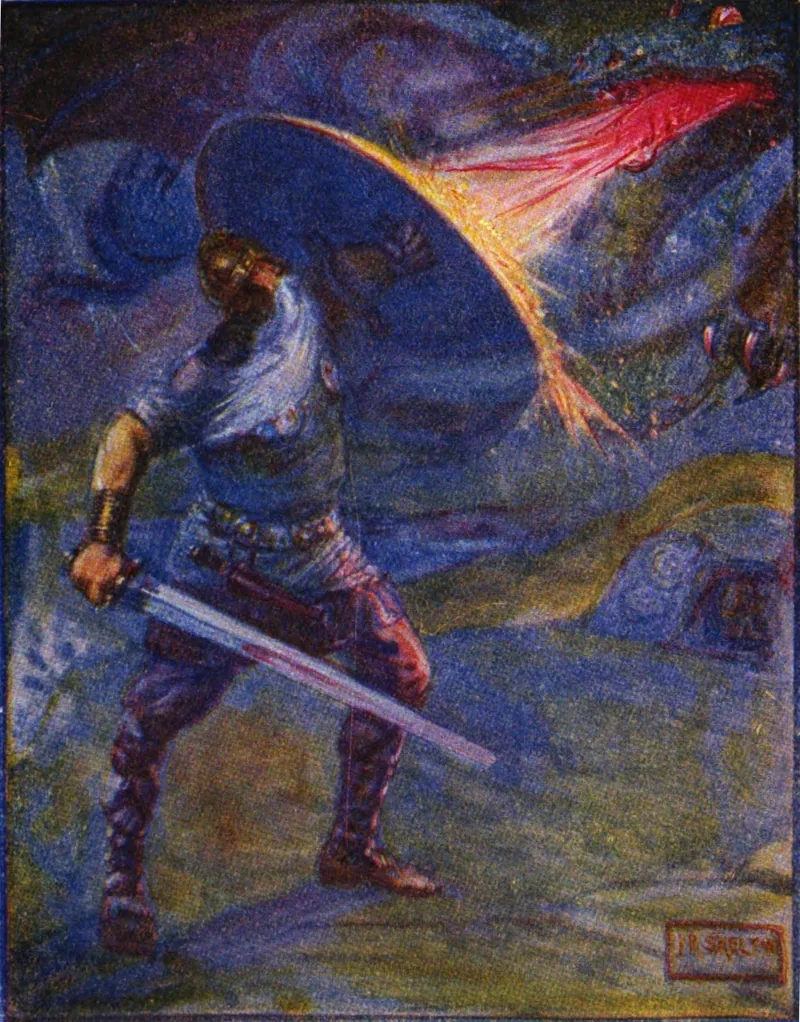
Literature Beowulf, now king of the Geats, ruled well for fifty winters, until a dragon began to rage. Beowulf, trans. Francis B. Gummere, Project Gutenberg ↗
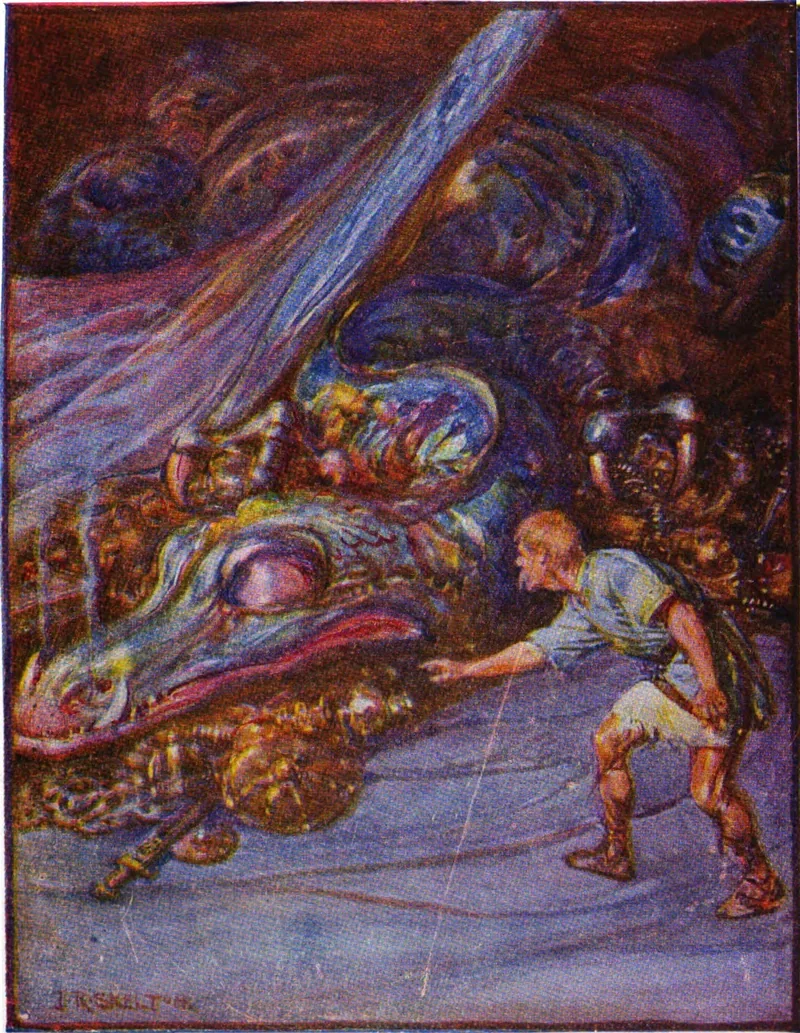
Literature The dragon guarded a hoard in a stone barrow on a hill. A man found the hidden path and took a golden cup while it slept. Beowulf, trans. Francis B. Gummere, Project Gutenberg ↗
Literature The dragon had kept the hoard for three hundred winters. It woke, found the cup gone, and at nightfall flew out wrapped in flame. Beowulf, trans. Francis B. Gummere, Project Gutenberg ↗
The last fight
Literature Beowulf ordered a shield made all of iron, because a wooden one would burn. Beowulf, trans. Francis B. Gummere, Project Gutenberg ↗
Literature With eleven comrades he went to the barrow; the thief who had started it all went with them as the thirteenth man. Beowulf, trans. Francis B. Gummere, Project Gutenberg ↗
Literature In the fight, Beowulf’s sword Naegling shattered. All his men fled except young Wiglaf, who stood by his king. Beowulf, trans. Francis B. Gummere, Project Gutenberg ↗
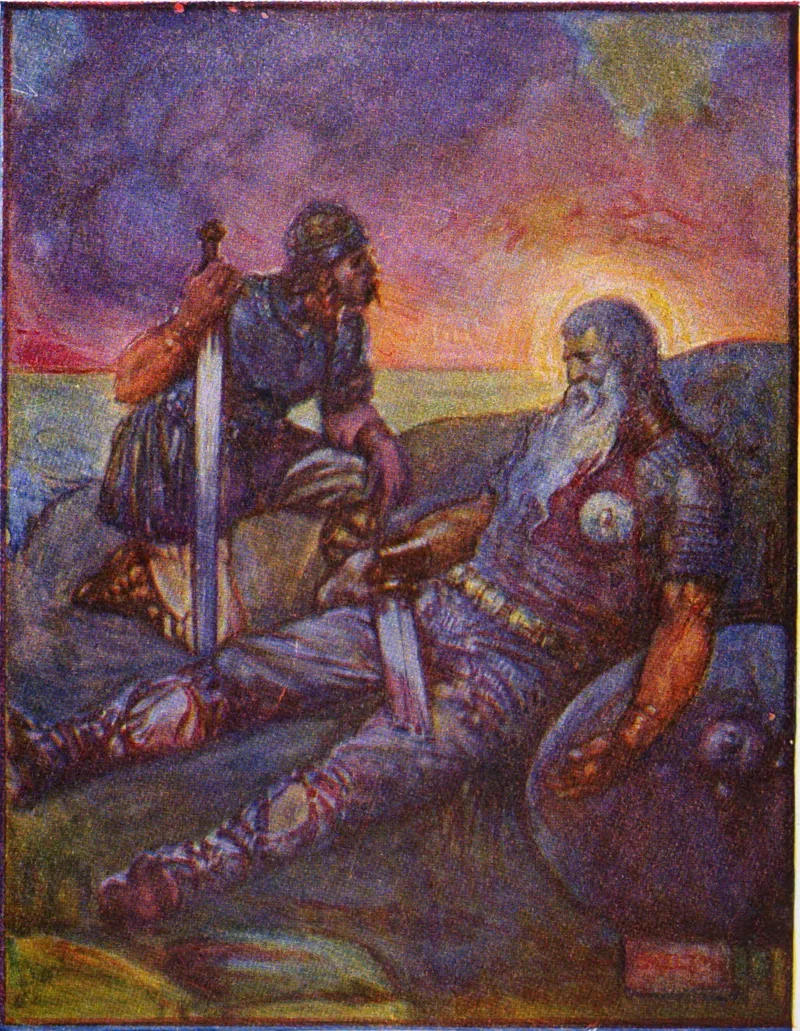
Literature Together they killed the dragon, but Beowulf was badly wounded by its poison. He asked for a barrow on Hrones Headland, where sailors would see it. Beowulf, trans. Francis B. Gummere, Project Gutenberg ↗
Literature Twelve warriors rode round the barrow to mourn him, saying he was of men ‘mildest and most beloved’. Beowulf, trans. Francis B. Gummere, Project Gutenberg ↗
About the poem
Literature The Project Gutenberg Beowulf is the translation by Francis Barton Gummere. Beowulf, trans. Francis B. Gummere, Project Gutenberg ↗
Literature Earlier in the poem, a court poet sings of Sigemund, who ‘a dragon killed that herded the hoard’. Beowulf, trans. Francis B. Gummere, Project Gutenberg ↗
Sigemund’s dragon is a short story inside the poem. In the Norse tales, the dragon-slayer is Sigmund’s son Sigurd.
Follow the thread
Beowulf, trans. Francis B. Gummere, Project Gutenberg ↗
Retellings are in our own words. Every sentence above carries a label (History, Literature or Tradition) and a link to the source it was checked against. A legend is not a historical record.
Source method & more reading ↗